 By Ethan Brooks
Updated November 2026
Baby proofing cabinets without knobs means choosing a lock that grips the door or drawer itself, not the hardware you no longer have. This list focuses on child safety latches that install with adhesive or friction, need no drilling, and hold up to a determined toddler. Selection criteria: adhesive or no-drill installation, suitability for knobless and recessed-pull cabinets, release mechanism a toddler cannot easily operate, and clear fit guidance from manufacturers.
Our top picks at a glance
- 1
 TOP CHOICEBest overallBenny Bradley’s Invisible Baby Proofing Cabinet Locks, Child Safe, 10 PackView on Amazon
- 2
 TOP CHOICEBest for large kitchensNo Drill 3M Adhesive Cabinet Locks Baby Proofing, 14 PackView on Amazon
- 3
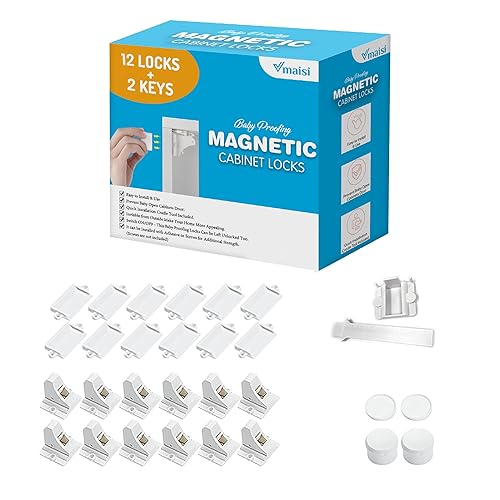 TOP CHOICEBest for magnetic, keyed accessVmaisi Adhesive Magnetic Cabinet Locks (12 Locks and 2 Keys)View on Amazon
- 4
 Best for double-door cabinetsSafety 1st Double Door Baby-Proofing Cabinet Lock, 2 PackView on Amazon
- 5
 Best for drawers and standard-length cabinetsInaya Cabinet Locks Baby Proofing (Standard Length), 8 PackView on Amazon
Our Top Picks
| Product | Best for | Key feature |
|---|---|---|
| Benny Bradley’s Invisible Baby Proofing Cabinet Locks, 10 Pack | Overall household use | Adhesive, no drilling |
| Cabinet Locks Baby Proofing 14 Pack | Large kitchens | Adjustable length latches |
| Vmaisi Adhesive Magnetic Cabinet Locks | Parents wanting keyed access | Magnetic key release |
| Safety 1st Double Door Cabinet Lock | Double-door cabinets | Two-door linking design |
| Inaya Cabinet Locks Baby Proofing | Drawers and standard cabinets | Standard length, 8 pack |
Benny Bradley’s Invisible Baby Proofing Cabinet Locks, Child Safe, 10 Pack
Child safety latches for kitchen cabinets, drawers and dressers; 3M adhesive, no drilling, fits countertop overhangs Benny Bradley’s Invisible Baby Proofing Cabinet Locks, Child Safe, 10 Pack
Best for: Overall household use with mixed cabinet and drawer types.
Suits families who want one consistent lock across kitchen and bathroom cabinets, and who prefer a low-profile look inside the cabinet.
Pros
- Adhesive 3M mounting requires no drilling.
- Works on countertop overhangs and recessed pulls.
Cons
- Adhesive needs a clean, dry surface to hold well.
No Drill 3M Adhesive Cabinet Locks Baby Proofing, 14 Pack
No drill 3M adhesive, Easy to install No damage, Adjustable length, Material safety, Suitable for drawers, fridge, cupboards Cabinet Locks Baby Proofing – 14 Pack Child Safety Latches White
Best for: Large kitchens that need many locks.
Fits households with lots of lower cabinets, drawers and a fridge, where a larger count keeps the cost per door manageable without sacrificing coverage.
Pros
- Adjustable length covers different cabinet depths.
- Listed as suitable for drawers, fridges and cupboards.
Cons
- Owners often report that adhesive pads need a few hours to bond fully.
Vmaisi Adhesive Magnetic Cabinet Locks (12 Locks and 2 Keys)
Keeps dangerous things away from kids Vmaisi Adhesive Magnetic Cabinet Locks (12 Locks and 2 Keys)
Best for: Parents who want keyed access for adults.
Works for homes where caregivers need to open cabinets quickly while toddlers stay out, since the magnetic key release avoids fiddly push-and-pull steps.
Pros
- Magnetic key releases the lock without a visible keyhole for children.
- Includes two keys and 12 locks.
Cons
- Keys must be kept out of reach, so the system depends on adult habits.
Safety 1st Double Door Baby-Proofing Cabinet Lock, 2 Pack
Safety 1st Double Door Baby-Proofing Cabinet Lock 2 Pack, White
Best for: Double-door cabinets where both doors must stay closed.
A good fit for kitchens with paired cabinet doors, where a single latch would leave one side open.
Pros
- Designed specifically to lock two doors together.
- Made by an established child-safety brand.
Cons
- Only two per pack, so full-kitchen coverage needs extra packs.
Inaya Cabinet Locks Baby Proofing (Standard Length), 8 Pack
Inaya Cabinet Locks Baby Proofing (Standard Length) – Child Proof Drawer Locks – Child Safety Cabinet Latches with 3M Adhesive Easy Installation – No Drilling or Extra Screws (8 Pack)
Best for: Drawers and standard-length cabinets in smaller homes.
Works well for apartments or rental kitchens where a moderate count of locks covers the key spots without over-buying.
Pros
- Standard length suits most base cabinets.
- No drilling or extra screws required.
Cons
- Not adjustable, so unusually deep cabinets may need a different length.
Buying Guide
Check your cabinet door and pull style
Knobless cabinets often have recessed or integrated pulls, so measure the gap between the door edge and the frame before choosing a latch length. Manufacturers usually specify a maximum overhang for their adhesive latches.
Decide between adhesive and friction mounts
Adhesive latches avoid drilling but need a clean surface and time to cure. Friction and magnetic options can be easier to remove, though owners often report they need checking as toddlers get stronger.
Match the release to who opens the cabinet
If adults need quick access, a magnetic or keyed release is practical. If several caregivers share the home, simple push-to-release latches are easier to teach.
FAQ
Can I baby proof cabinets without knobs?
Yes. Latches that mount with adhesive or friction grip the door or drawer front itself, so they work on knobless and recessed-pull cabinets. Choose a lock designed for that style before you buy.
Will adhesive latches damage my cabinets?
Adhesive latches are designed to be removed without drilling, but removal can still leave residue or pull off paint or veneer on some finishes. Test one lock on an inside corner first and read the manufacturer’s removal instructions.
Are magnetic cabinet locks safe for toddlers?
Magnetic locks work well because they require a separate key or magnet to open, which a young child cannot easily find. Keep the keys out of reach, since a child who finds a key can open every lock in the set.
How do I know if a latch will fit my cabinet?
Measure the gap between the door and the frame, and check whether your cabinets have a countertop overhang that could block a latch. Compare those measurements against the length and fit notes listed by the manufacturer.
Do child safety latches work on drawers as well as cabinet doors?
Many latches are made for both, but drawers often need a different style that hooks onto the drawer front or the frame. Check the product notes for drawer compatibility before ordering.
Should I use latches on the refrigerator or dishwasher?
Some latches are sold for refrigerator and dishwasher doors, which can be hazardous for toddlers. Use a lock rated for that use and make sure the adhesive will hold on the surface type you have.
Conclusion
If you want the simplest setup and have standard cabinets, a multi-pack of no-drill adhesive latches is the most practical choice. If you want a secure, drill-free system with a separate key, the magnetic set suits families who want quick access for adults and firm control for toddlers.
For double doors or a mix of cabinets and drawers, pick a lock designed for that layout, and always check fit before buying. Whatever you choose, test each latch and replace any that loosen over time.
Related reading
- When to Remove Baby Proofing: 4 Best Cabinet and Door Locks for Toddler Homes
- Hacks for Baby Proofing Cabinets: 7 Practical Tricks That Work (2026)
- DIY Baby Proofing Door Knobs: 5 Steps to Stop Little Hands
About Ethan Brooks
Ethan Brooks is part of our editorial team and reviews and edits our childproofing guides, checking product details against manufacturer specifications and owner feedback.


