By Ethan Brooks
Updated November 2026
Family care baby proofing locks are a practical way to keep toddlers out of cabinets, drawers and rooms that hold cleaning products, medicines and sharp objects. This guide walks you through choosing the right lock type, installing it correctly and testing that it holds up under a determined toddler. Most of the work takes less than an hour per room.
Choose the Right Lock Type for Each Location
Not every spot in the house needs the same lock. Match the lock to the surface and how often an adult needs access.
Shopping for one? See our guide: 5 Best Toilet Locks for Baby Proofing: 5 Compared for Toddler Homes (2026).
- Magnetic cabinet locks suit cabinets you open daily, since they release with a hidden magnet key and leave no visible hardware.
- Hook-and-loop or strap locks work on cabinets with two handles and are easy to remove without tools.
- Sliding door locks fit on the inside or outside of sliding doors and block the track.
- Toilet and appliance locks prevent access to water and to dishwashers or ovens with open doors.
For a room-specific breakdown, see Safe Proofing Your Home for Baby: A Room-by-Room Guide (2026).
Install Cabinet and Drawer Locks Step by Step
Installation errors cause most failures, so take your time with the mounting surface and spacing.
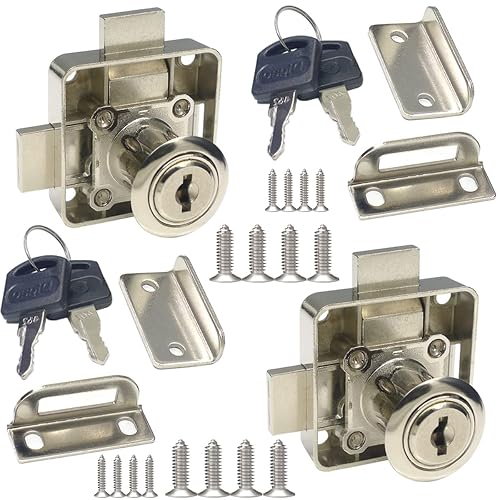
- Open the cabinet or drawer and clean the inside surface with a dry cloth so adhesive or screws bond properly.
- Test-fit the lock with the door closed. The latch should engage fully without forcing it.
- Mark the screw holes or adhesive positions, then drill pilot holes if the manufacturer calls for them.
- Install the lock and close the door. Confirm the catch sits flush and the door does not rebound.
- Pull firmly in several directions. A properly installed lock should not move, flex or release under moderate force.
Drawer-specific instructions are covered in Drawer Locks Baby Proofing: 6 Steps to Secure Every Drawer and Baby Proofing Kitchen Drawers: 6 Steps to Lock Down Every Drawer.
Secure Doors, Windows and Toilets
Doors and toilets present different challenges because the forces involved are larger. A sliding door lock needs to sit in the track with enough clearance that the door can still open for adults. Check that the lock does not bind when the door is fully closed.
For lever-style door handles, a clip-on or lever cover prevents a toddler from opening a door to a stairway or bathroom. Review options in Baby Proofing Door Handles: 5 Best Lever Locks Compared (2026). Toilet lids can be secured with a simple lid lock, which is covered in 5 Best Baby Proofing Toilet Locks for Toddler Homes (2026).
Sliding doors and window locks follow similar logic. The guide at Sliding Door Locks for Baby Proofing: A Step-by-Step Guide (2026) explains how to set the stop position so the door opens only a few inches.
Test and Maintain Your Locks
A lock that passes installation can still fail after a few months of use. Build a short routine around it.
- Check adhesive and screw tightness once a month.
- Look for cracked housings, bent catches or worn magnets.
- Test each lock from a child’s perspective: try pulling, pushing and lifting from different angles.
- Replace any lock that has lost its grip or no longer engages fully.
Common Mistakes to Avoid
- Relying on adhesive alone on painted or textured surfaces where it may peel.
- Leaving keys or magnetic tools within a toddler’s reach, which defeats the lock.
- Installing a lock so tight that adults struggle to open it quickly in an emergency.
- Skipping the pull test after installation.
- Assuming one lock type works everywhere in the home.
Recommended Gear
- Magnetic cabinet lock sets are useful for cabinets you open often, because the hidden key keeps the look clean. View on Amazon
- Sliding door stop locks give a simple barrier on track doors without drilling. View on Amazon
- Toilet lid locks prevent drowning risks and are quick to attach. View on Amazon
FAQ
Do family care baby proofing locks need drilling?
Many do not. Adhesive-mounted and strap-style locks avoid drilling, but they work best on smooth, clean surfaces. Drilled installations generally hold up better on heavy or frequently used doors.
How often should I check my baby proofing locks?
A monthly check is a sensible routine for most homes. Check sooner if a toddler has been pulling on a lock or if the household has many daily users.
Can I use these locks on rental property?
Adhesive and removable locks are usually the better choice for rentals because they leave less residue. Check your lease before drilling, and consult your landlord if you are unsure.
Conclusion
Family care baby proofing locks protect toddlers when they are matched to the right surface and installed carefully. Work room by room, test every lock with firm pulls, and recheck hardware regularly. A few focused hours of setup can prevent injuries that are far harder to undo.
Related reading
Ready to choose one?
About Ethan Brooks
Ethan Brooks is part of our editorial team and reviews and edits our childproofing guides, checking product details against manufacturer specifications and owner feedback.