By Ethan Brooks
Updated November 2026
Dreambaby hinged furniture anchors are a strap-and-bracket style anti-tip kit aimed at parents who want to secure a dresser, bookcase or TV stand to a wall without a lot of visual clutter. This review looks at the Dreambaby Hinged Anti-Tip Furniture Anchors in white, based on the product listing and the patterns owners tend to describe. They suit parents who have a walker or climber in the house, want a fixed anchor that stays out of sight once installed, and are comfortable drilling into studs. They are a weaker fit for renters who cannot drill, for people who need to secure very heavy or top-heavy pieces, and for households that want a fully adhesive or tool-free solution.

Dreambaby Hinged Anti-Tip Furniture Anchors, White
Product Overview
The Dreambaby Hinged Anti-Tip Furniture Anchors are a wall-mounted anti-tip system. Each kit uses a mounting plate that screws into the wall and a hinged arm that attaches to the back or top of the furniture. The hinge lets the arm fold flat against the wall when you are not using it, which is the main reason parents tend to choose this style over a fixed bracket. Because the arm sits close to the wall, the finished look is less obvious than a bulky metal strap.
The product is sold under the Dreambaby brand, which focuses on infant and toddler safety accessories such as gates, corner guards and cabinet locks. The anchors fit the broader category of furniture anti-tip hardware, which is the same family of products used to stop dressers and TVs from tipping when a child pulls on a drawer or climbs the front. If you are new to this category, our guide to Furniture Anchors: Stopping TV and Dresser Tip-Overs explains the basic mechanics before you compare specific products.
Key Features & Specifications
The table below lists the features that are stated in the product name or are well established for this style of hinged anchor. Where a figure is not something we can confirm from the listing, we have left it out rather than guess.
| Feature | Details |
|---|---|
| Product type | Hinged anti-tip furniture anchor (wall-mounted) |
| Finish | White |
| Mounting | Screws into wall; requires drilling |
| Hinge design | Arm folds flat against the wall when not in use |
| Intended use | Securing dressers, bookcases, TV stands and similar furniture |
| Brand | Dreambaby |
| Listing ASIN | B07QLZYDJ8 |
Manufacturers of anchors like these typically specify a maximum load per anchor and advise that every anchor must be fastened into a structural stud or solid backing. Always check the printed instructions in the box and the weight rating stated on the packaging for your specific kit, since ratings vary between models and between kit sizes. If you are unsure whether your wall or furniture can take the load, a qualified installer or handyman can confirm before you drill.
Pros & Cons
Pros
- The hinged arm folds flat, so the anchor is far less visible than a fixed metal strap once it is installed.
- White finish blends with many light-colored walls and nursery furniture.
- Gives a fixed, mechanical connection between furniture and wall, which is more reliable than adhesive-only options for heavy pieces.
- Brand focus on infant and toddler safety means the product fits neatly into a wider baby-proofing plan.
- Owners often describe installation as straightforward for anyone comfortable with a drill and a stud finder.
Cons
- Requires drilling into the wall, which rules it out for many renters without landlord permission.
- Only works well when the wall has solid backing; hollow drywall without a stud or blocking is a poor match.
- The hinge adds a moving part that needs to be checked over time to make sure it still locks firmly.
- Not suited to very tall, very heavy or unusually shaped furniture without additional anchors.
- Owners sometimes report that the arm can be awkward to align on furniture with thin or uneven backs.
Performance Analysis
Hinged anchors perform best when they are used the way they were designed: fastened into studs, attached to a sound part of the furniture, and checked periodically. Because the connection is mechanical rather than adhesive, it does not degrade with heat, humidity or dust the way some sticky products can. That is the main performance advantage of this style. The arm also keeps the furniture close enough to the wall that a child who pulls a drawer usually has less leverage to tip the piece forward.
The trade-offs show up mostly during installation and long-term use. Owners who have discussed hinged anchors commonly mention that alignment is the fiddly part. If the mounting plate is even slightly out of line with the arm, the hinge will not seat properly, and you may need to re-drill. Using the template or pilot holes recommended in the instructions helps. Over time, the hinge and screws should be inspected, especially after a piece has been moved, since loose hardware is the most common reason an anchor stops doing its job.
In terms of what the product can hold, the honest answer is that it depends on the furniture, the wall and how many anchors you fit. A single anchor on a light bookcase is a very different job from anchoring a tall, loaded dresser. Follow the weight guidance on the packaging, use more than one anchor for tall pieces, and treat the anchor as one part of a plan rather than a complete fix. Our article on Heavy Duty Furniture Anchors: How to Secure Dressers and TVs (Step-by-Step) covers how to size up a load when a single anchor may not be enough.
Who Should Buy This Product?
This product makes the most sense for homeowners or long-term renters with permission to drill, who have a child old enough to climb or pull open drawers and who want a discreet, mechanical fix. It is also a good match for parents who are already using other Dreambaby safety products and prefer a consistent look across the home.
You should probably skip it if you rent without permission to drill, if your walls are hollow in the spot you need, or if you want a no-tool solution. In those cases, an adhesive or freestanding alternative may serve you better, even though it will not offer the same fixed hold. For renters, our piece on Furniture Anchors No Drill: 6 Renter-Friendly Ways to Stop Tip-Overs walks through the options that avoid wall damage.
Buying Guide
Before buying any anti-tip anchor, measure the wall material and locate the studs. Most standard American homes use wood studs spaced 16 inches on center, but confirm this with a stud finder rather than assuming. Check the weight rating on the packaging, then compare it to the actual weight of the furniture plus the items you store on it. Pay attention to the height of the piece and where the anchor point will sit, because a higher attachment point usually gives better resistance to tipping.
When you compare kits, look at the number of anchors included, the hardware provided, the finish, and whether the design suits the back or top of your furniture. Also check whether the hardware is designed for wood, drywall or masonry, since the wrong screws are a common cause of failure. Here are a few well-known alternatives that serve the same purpose:
- Anti Tip Furniture Anchors, Steel Wall Anchors, 12 Pack, Silver – a multi-pack option for households that need several anchors across a room. Listing description notes they help secure dressers, cabinets and bookcases for baby and pet safety with quick installation.

Furniture wall anchors help secure dressers, cabinets and bookcases for baby and pet safety with quick, easy installation. Anti Tip Furniture Anchors, Steel Wall Anchors, 12 Pack, Silver
- Furniture Anchors 4 Pack, Aesthetic & Invisible Once Installed, Secure 600 lbs Bookcase Dresser to Wall (White) – a smaller pack with an invisible-once-installed finish and a stated load rating of 600 lbs in the listing title. Confirm the rating applies to your installation before relying on it.
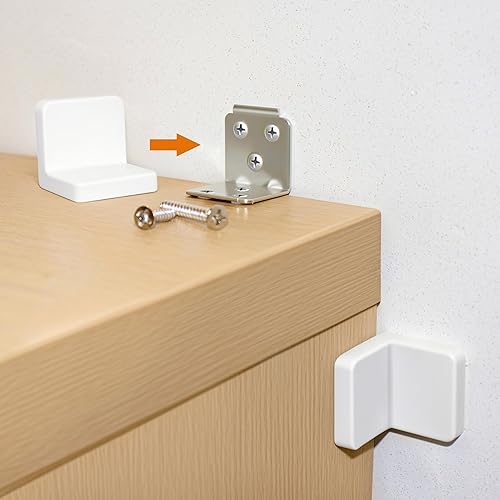
Furniture Anchors 4 Pack,Aesthetic & Invisible Once Installed,Secure 600 lbs Bookcase Dresser to Wall,Anti-Tip Furniture Safety Anchor to Childproof and Babyproof Your Home (White)
For a wider look at what is available, see 7 Best Furniture Wall Anchors for Toddler-Safe Homes (2026). If you are planning a full room, Baby Proofing Securing Furniture: A Room-by-Room Step-by-Step Guide shows where anchors fit alongside other measures.
FAQ
Do I need to drill into studs for these anchors?
Yes, you should. Anchors are designed to be fastened to structural framing or solid backing. Anchoring only into hollow drywall with the included hardware can pull out under load, which defeats the purpose.
Can I use these on a TV stand?
They can be used on a TV stand if the stand has a suitable attachment point and the wall can take the load. Many parents use anti-tip anchors for flat-screen TVs, but check the TV mount and stand instructions as well, since the anchor is only one part of the connection.
Will the hinge stay secure over time?
Most hinged anchors stay secure if installed correctly, but the hinge and screws should be checked every few months, and after you move the furniture. Tighten any loose hardware and replace worn parts.
Are they visible once installed?
The hinged design folds the arm close to the wall, so the anchor is far less noticeable than a fixed bracket. Owners often describe the finished look as discreet, especially on light walls with white furniture.
How many anchors do I need for a dresser?
Many tall dressers are secured with at least one anchor, and taller or heavier pieces often benefit from two. Follow the manufacturer’s guidance and consider the height of the piece, how full the drawers are, and whether children will climb it.
Can renters use hinged furniture anchors?
Only with the landlord’s permission, since the installation requires drilling into the wall. If drilling is not allowed, look at the no-drill options and adhesive alternatives instead.
Should I get a professional to install them?
If you are unsure about locating studs, the wall material, or the weight rating, a qualified installer or handyman is a sensible choice. Anti-tip hardware is a safety product, so when in doubt, have it checked by a professional.
Final Verdict
The Dreambaby Hinged Anti-Tip Furniture Anchors in white are a solid choice for parents who can drill into studs and want a discreet, mechanical way to stop dressers and bookcases from tipping. The folding arm is the standout feature, and it keeps the look clean once the anchor is in place. The main limitations are the drilling requirement, the need for solid backing, and the fact that alignment takes care during installation. If those conditions fit your home, this is a reasonable option to consider alongside the alternatives above. Compare the weight rating, the number of anchors you need, and your wall type before you buy.
About Ethan Brooks
Ethan Brooks is part of our editorial team and reviews and edits our childproofing guides, checking product details against manufacturer specifications and owner feedback.